

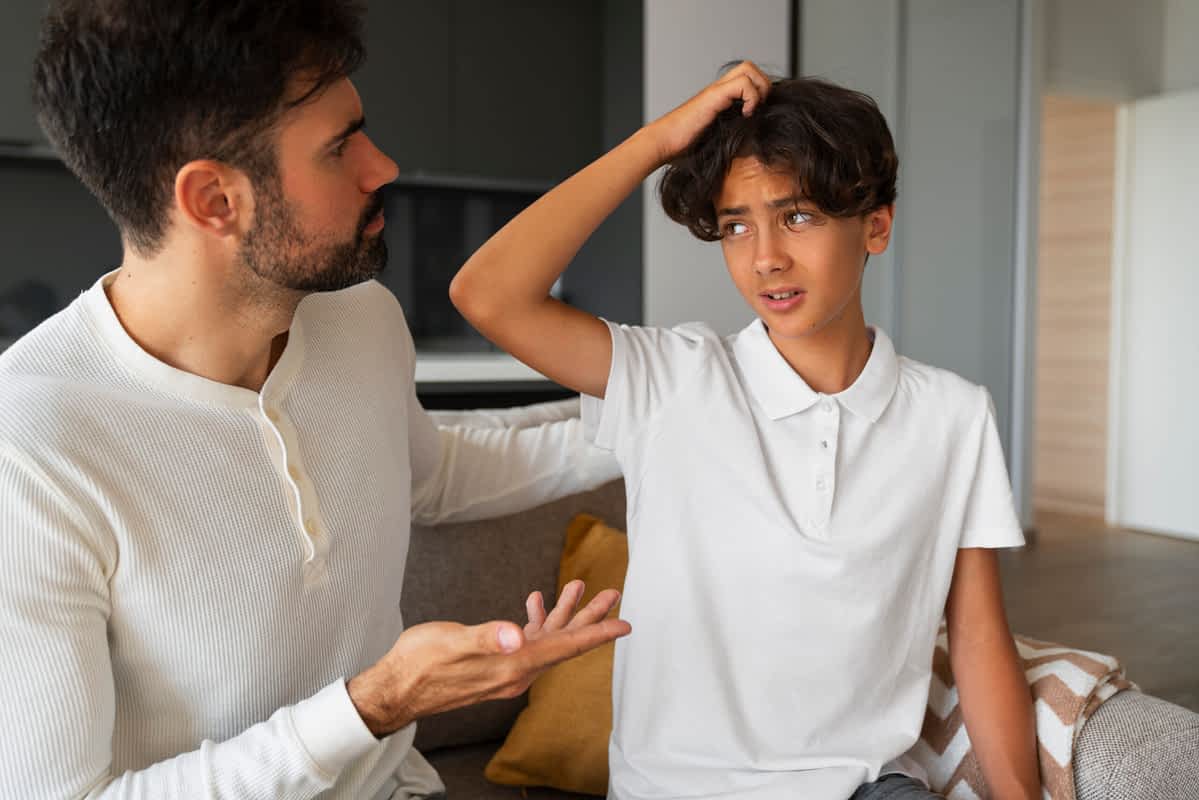
Guys With Daddy Issues Don’t Talk About It, But Their Relationships Tell the Whole Story
You’ve probably heard about “daddy issues” in women a thousand times. Society loves to dissect how a woman’s relationship with her father shapes her love life, her self-worth, her everything.
Here’s what gets swept under the rug: men with father issues carry just as much emotional baggage from dad, maybe even more. The difference is they’ve been taught to bury it so deep that even they don’t recognize it’s there.
And that buried pain leaks into every relationship they touch.
The father wound in men doesn’t announce itself with drama. It’s quieter than that, because it shows up in the way he shuts down during conflict. In how he avoids vulnerability like it’s a threat. In the walls he builds so high that you can’t climb them even when you’re holding a ladder.
Men’s emotional baggage from dad is always present, shaping how he loves, how he connects, and whether he can truly let you in.
So let’s talk about what father issues affect on a man’s relationships, what it actually looks like, and why understanding this changes everything.
What Are Father Issues in Men?
Father issues in men stem from an absent, emotionally unavailable, or harmful father figure during childhood. Maybe his dad was physically there but emotionally checked out. Maybe he was critical, dismissive, or just never showed up at all.
Either way, the message a boy internalizes is the same: “I’m not enough. My feelings don’t matter. Love is conditional.”
That’s the father wound. It’s the emotional scar left behind when a father doesn’t provide the affirmation, guidance, or safety his son needed.
Even if his dad was trying his best, even if he loved his son in his own broken way, the wound still forms if the son didn’t feel seen, valued, or secure.
Psychology backs this up. Studies show that boys who grow up without emotional connection to their fathers struggle with self-esteem, intimacy, and emotional regulation as adults. They’re more likely to experience anxiety, depression, and relationship dysfunction.
The absence of a father’s presence, whether physical or emotional, rewires how a man sees himself and everyone around him.
How Father Issues Affect a Man’s Relationships
When guys with daddy issues step into romantic relationships, they bring the father wound with them. Sometimes it’s obvious. Other times, it hides behind charm, humor, or success. Here’s how it shows up.
He struggles with vulnerability. Men with father issues often equate emotional openness with weakness. If his dad never modeled healthy emotional expression, he doesn’t know how to do it himself.
So instead of sharing what’s really going on inside, he deflects, jokes, or shuts down completely. You might feel like you’re dating a wall because, in a way, you are. The vulnerability you crave feels like danger to him.
He’s terrified of rejection. Deep down, he’s still that little boy wondering why his dad didn’t choose him. That fear of being unwanted follows him into adulthood. He might self-sabotage relationships before you can leave him first.
Or he’ll keep one foot out the door, never fully committing because commitment means risking the rejection that destroyed him as a child.
He has trust issues. If the first man in his life, the one who was supposed to protect and guide him, let him down, why should he trust anyone else?
Men’s emotional baggage from dad creates a baseline assumption that people will disappoint you. He might test you, push you away, or constantly scan for signs that you’re about to bail. It’s exhausting for both of you.
He lacks emotional regulation skills. Healthy emotional development happens when a father teaches his son how to identify, express, and manage feelings.
Without that foundation, guys with daddy issues often swing between emotional extremes. He might explode over small things or go completely numb when something big happens. It’s not that he doesn’t care. He just never learned the tools.
He seeks validation externally. When a man doesn’t get affirmation from his father, he spends his whole life looking for it elsewhere. Maybe it’s through work, status, or achievements. Maybe it’s through romantic partners.
You might notice he needs constant reassurance, or that his self-worth rises and falls based on external feedback. The father wound left a hole, and he’s been trying to fill it ever since.
He repeats toxic patterns. Here’s the hard truth: men with father issues often recreate the dynamics they experienced with their dads. If his father was critical, he might become critical of you or himself. If his father was distant, he might pull away when things get too close.
Unconsciously, he’s trying to master the original wound by replaying it. Except this time, he’s hoping for a different ending.

What the Father Wound in Men Looks Like in Daily Life
The father wound doesn’t just show up during big relationship moments. It’s woven into the everyday. He might avoid deep conversations, keeping things surface-level because that’s where it feels safe. He could have a hard time accepting love, almost like he doesn’t believe he deserves it. Compliments bounce off him. Acts of kindness confuse him. You’re giving, but he’s not receiving.
Father issues affect on a man’s relationships also manifest in how he handles conflict. If his dad was aggressive, he might mirror that aggression when he’s upset.
If his dad was passive, he might shut down instead of fighting for the relationship. Neither response is healthy, but both make sense when you understand where they come from.
He might also struggle with authority figures, jumping between rebellion and people-pleasing. At work, he might clash with bosses or go out of his way to prove himself. In friendships, he might avoid male connections altogether because they remind him of what he didn’t get from his father.
Can Men With Father Issues Have Healthy Relationships?
Absolutely. But here’s what it takes: awareness and intentional healing. A man has to recognize the father wound exists before he can address it. That’s the hardest part.
Society doesn’t encourage men to dig into their emotional histories. Therapy is still stigmatized. Admitting pain feels like failure. So many guys with daddy issues go their whole lives not connecting the dots between their childhood and their relationship struggles.
Healing starts with acknowledgment. He has to name the wound, understand how it shaped him, and take responsibility for how it’s affecting his relationships now.
That might mean therapy, self-reflection, or both. It definitely means sitting with uncomfortable feelings instead of running from them.
If you love someone with men’s emotional baggage from dad, your role isn’t to fix him. You can’t heal the father wound for him. What you can do is create a safe space where vulnerability is possible.
You can hold boundaries when his unhealed patterns hurt you. You can encourage healing without making it an ultimatum. Most importantly, you can decide whether the relationship, as it is right now, meets your needs. Love is powerful, but it’s not a cure.
Why This Matters More Than We Talk About
The conversation around father issues in men needs to be louder. We’ve spent decades discussing how absent or harmful fathers affect daughters, and that work is vital.
But men are hurting too, and their pain ripples out into every relationship, every family, every generation. When we ignore the father wound in men, we’re ignoring half the healing that needs to happen.
Men with father issues aren’t broken. They’re wounded. And wounds, when given attention and care, can heal. The first step is seeing the wound for what it is.
The second is believing that healing is possible. Because it is. It takes time, effort, and often professional support, but men can absolutely break the cycle and build the kind of relationships they never saw modeled for them.
You can’t force someone to heal. You can only show up with compassion and truth. Sometimes that means walking alongside someone on their journey. Sometimes it means walking away to protect your own peace. Either choice is valid.
What matters is that you see the father wound clearly, understand how father issues affect on a man’s relationships, and make decisions from a place of clarity instead of confusion.
The father wound is real. It’s deep. And it’s time we all started talking about it.
This post may contain affiliate links. I earn from qualifying Amazon purchases at no extra cost to you. This content is for informational purposes only and is not a substitute for professional advice. Read full disclaimer.
Thank you for reading this post, don't forget to subscribe!