
The Moment You Realize He Doesn’t See You as a Person
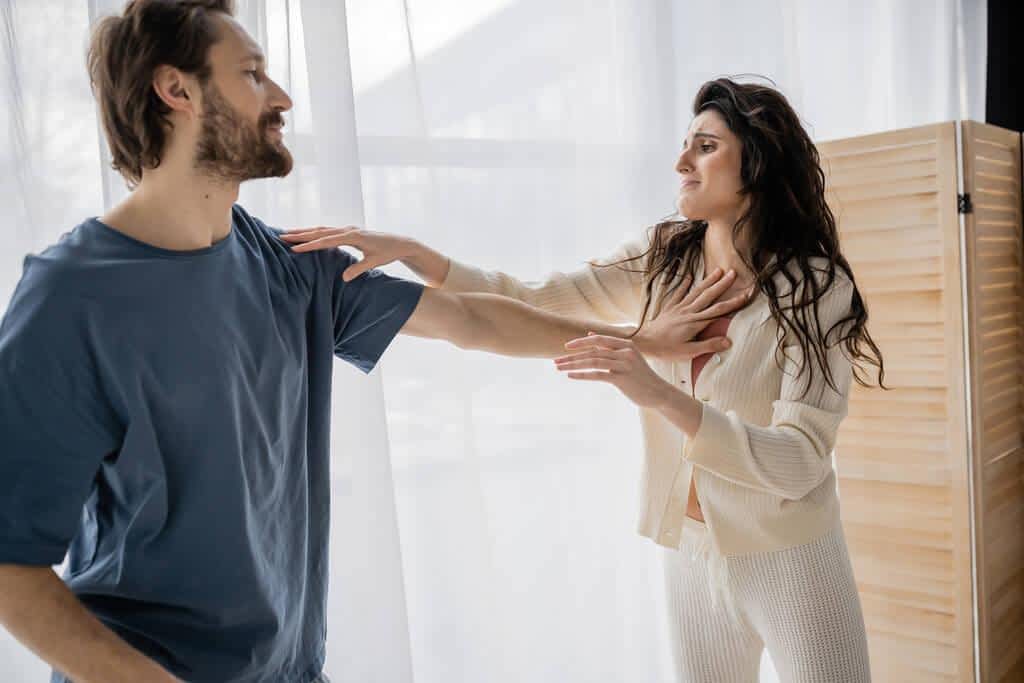
I remember sitting across from someone I thought knew me, realizing mid-conversation that he wasn’t listening to understand. He was waiting for his turn to talk. Or worse, he was categorizing everything I said into boxes labeled “emotional,” “dramatic,” or “too much.” I wasn’t a person in that moment. I was a problem to solve or a role to fill.
That’s what the dehumanization of women looks like up close. It’s subtle. Sometimes it just sounds like being interrupted for the third time in one conversation. Or having your pain dismissed as overreaction. Or realizing that the guy you’re talking to sees you as a collection of parts instead of a whole human being.
The Moment You Stop Being a Person
You can feel it when it happens. When men don’t see women as equals, there’s a shift in the air. Your words carry less weight. Your boundaries become suggestions. Your feelings get reduced to inconveniences. You start to notice that your thoughts are interesting only when they align with his, and your experiences only matter when they don’t challenge his worldview.
I’ve watched this play out in relationships where women bend themselves into shapes they don’t recognize anymore, just to be seen as worthy of basic respect. They shrink their ambitions. They laugh at jokes that aren’t funny. They apologize for taking up space. And still, it’s not enough. Because the issue isn’t what they’re doing. The issue is that they’re being treated like objects instead of people.
When Toxic Masculinity Shapes How Men See Women
Toxic masculinity and women exist in a toxic dance where empathy gets replaced with entitlement. Some men grow up learning that women exist to serve a function. Mother. Girlfriend. Wife. Caretaker. Fantasy. Each role comes with expectations, and when you don’t fit neatly into one, you become difficult or “too complicated.”
This isn’t about all men, but it’s about enough men that most women have a story. Maybe it’s the coworker who talks over you in every meeting. Maybe it’s the date who gets angry when you don’t respond to his texts fast enough. Maybe it’s the partner who listens to his friends’ advice about your relationship more than he listens to you.
These moments add up. They create a pattern where women aren’t seen as fully human by men, but as supporting characters in someone else’s story. You exist to validate, to nurture, to look good standing next to him. Your inner life becomes secondary. Your autonomy becomes negotiable.
What It Feels Like to Be Reduced
You find yourself over-explaining your feelings because you know they’ll be dismissed otherwise. You rehearse conversations in your head, trying to find the exact right words that will make him hear you. You start doubting your own perceptions because you’ve been told so many times that you’re being too sensitive.
When men treat women like objects, it creates a gap that intimacy can’t cross. Real connection requires seeing someone fully. Their flaws, their complexity, their contradictions. It requires believing that their internal experience is just as rich and valid as your own. When that recognition isn’t there, you’re left performing humanity instead of simply being human.
I’ve had conversations with men who genuinely couldn’t understand why their partner was upset. They’d done everything “right” according to some invisible checklist. They’d said the correct words, made the expected gestures. But they’d missed the entire person standing in front of them.
They were so focused on the role she was supposed to play that they forgot she had her own thoughts, her own needs, her own entire existence that didn’t revolve around them.
The Cost of Being Unseen
Living like this wears you down in ways that are hard to articulate. You start to feel crazy for wanting basic things like being listened to without interruption or having your boundaries respected without negotiation. You wonder if you’re asking for too much. You compare yourself to other women who seem to make it work, not realizing they’re probably just as exhausted as you are.
The dehumanization of women doesn’t always look like hatred. Sometimes it looks like indifference. Like being treated as interchangeable. Like having someone claim to love you while showing zero curiosity about who you actually are. It’s being valued for what you provide rather than who you are.
And here’s what makes it even harder: pointing it out often makes things worse. Because when you try to explain that you don’t feel seen as a full person, you get accused of being ungrateful or demanding. Your very attempt to assert your humanity becomes evidence that you’re difficult.
Why This Pattern Persists
Some men don’t see women as equals because they were never taught to. They grew up in homes where Mom did all the emotional labor while Dad remained comfortably clueless. They learned that women’s feelings were something to manage, not understand. They absorbed the message that masculinity means staying detached, staying in control, never admitting vulnerability.
Toxic masculinity and women can’t coexist in healthy relationships because toxic masculinity requires someone to be less than. It needs hierarchy. It needs someone to be the emotional one, the irrational one, the one who needs to be handled. When you’re taught that emotions are weakness and women are emotional, the math isn’t hard to do.
This gets reinforced everywhere. In media that treats women as prizes or plot devices. In workplaces that promote men who are assertive and penalize women who do the same. In social circles where men bond over treating women like mysteries to decode rather than people to know.
What Changes When You’re Finally Seen
I’ve also experienced the opposite. I’ve sat across from people who asked follow-up questions because they genuinely wanted to know my answer. Who remembered details from conversations we had weeks ago. Who didn’t need me to shrink or perform or prove anything.
The relief is overwhelming. You realize how much energy you’d been spending just trying to be acknowledged as human. When someone sees you fully, you can finally relax. You can be messy and complicated and contradictory because you’re not being measured against some narrow definition of what you should be.
That’s what women deserve in every interaction, not just the special ones. Being seen as fully human shouldn’t be rare. It should be the baseline.
Moving Beyond the Pattern
Things shift when men start doing the internal work to see women as complete people. That means questioning the stories they were told about what women are like. It means getting comfortable with emotions, their own and others’. It means recognizing that understanding someone isn’t the same as agreeing with them.
It also means listening when women talk about their experiences instead of immediately getting defensive. When women aren’t seen as fully human by men, pointing that out isn’t an attack. It’s an invitation to do better. To build something real instead of just going through motions.
Real relationships require two whole people showing up. When one person is relegated to supporting character, everyone loses. The connection stays surface-level. The intimacy never deepens. You end up next to each other but fundamentally alone.
The Truth About Being Fully Human
Here’s what I want you to know if you’ve ever felt unseen: your instinct isn’t wrong. When someone treats you like a function instead of a person, you’re not imagining it. When your feelings get dismissed or your boundaries get pushed, that’s real. You’re not too sensitive or too demanding for wanting to be treated like a complete human being.
If you’re someone who’s realizing you might not always see women fully, there’s still time to change that. Start paying attention to when you’re listening to respond versus listening to understand. Notice when you’re categorizing or dismissing. Ask yourself if you’d treat a male friend the same way.
.
Thank you for reading this post, don't forget to subscribe!