


When Decades Together End: The Hidden Weight of Late Life Divorce
One night last summer, after my neighbor’s divorce, I saw her sitting on her porch at 2 a.m., just staring at the street. She’d been married for thirty-seven years. The house she was sitting in front of wasn’t hers anymore.
She waved when she saw me, smiled even, then looked away like she’d forgotten I was there.
That image stayed with me.
Late life divorce carries a weight that’s hard to name. You’re not just ending a marriage. You’re dismantling the tapestry of your life – an entire world you built, room by room, year by year.
The emotional survival after a late-life divorce is about learning to stand when the ground beneath you has completely shifted.
The Money Panic of Rebuilding Your Life
You’d think splitting assets would be straightforward. Numbers on paper. Clean divisions.
It’s not.
When you’re untangling decades of shared finances, every decision feels loaded. Retirement accounts you built together. The house where you raised your kids. Maybe a business you started when you were young and hopeful. Suddenly you’re asking questions you never imagined: Will I have enough? Can I actually do this alone?
Coping emotionally with late life divorce often begins here, in the spreadsheets and legal documents that don’t feel practical at all. They feel personal. They feel like failure.
Dividing pensions and 401(k)s isn’t just math. It’s confronting a future you didn’t plan for. If there’s debt involved, it gets heavier. If spousal support is on the table, it can feel vulnerable to ask for what you need, even when you’ve earned it.
Then there’s estate planning. Updating your will. Changing beneficiaries. Deciding who gets what if something happens to you. Every box you check is another reminder that the life you knew is over.
So if you’ve cried over a financial statement or felt your chest tighten looking at account balances, you’re not overreacting. You’re grieving a future that won’t happen.
When Home Stops Being Home
One of the quietest heartbreaks of late life divorce? Losing the space where your life happened.
Maybe you’re the one who moved out. Maybe you stayed, but it feels different now. Either way, home doesn’t feel like home anymore. The couch where you used to sit together. The kitchen where you made coffee every morning for thirty years. The bedroom that’s too big and too quiet.
Emotional survival means sitting with that grief, even when it feels irrational. You’re not just mourning a person. You’re mourning a place. A rhythm. A sense of belonging.
Downsizing can feel like giving up. Packing boxes full of shared memories will crack you open. Going through closets, deciding what stays and what goes, it’s exhausting. If money’s tight, the pressure of finding somewhere new can feel suffocating.
Emotional healing after gray divorce sometimes looks like standing in a new kitchen you don’t recognize and wondering how you ended up here. Then, slowly, you start rearranging things. Adding small touches. Making it yours.
It takes time. Longer than you think it should. That’s okay.
The Identity Crisis No One Warns You About
After the papers are signed and the logistics settle, a bigger question surfaces: Who am I now?
You spent decades as part of a “we.” Your routines, your plans, maybe even your personality were shaped around that partnership. Now it’s just you. And that can feel like freefall.
Coping emotionally with late life divorce means untangling your identity from someone else’s. It means asking hard questions. What did I want before I became someone’s spouse? What did I give up to keep the peace? What do I actually care about now?
This isn’t a midlife crisis. It’s a midlife reckoning.
You might feel empowered one day and completely lost the next. You might start something new, travel somewhere alone, or just sit in your car and cry because you have no idea where to go. All of that is normal.
Emotional healing after gray divorce looks like giving yourself permission to change your mind. To try things that scare you. To be gentle with yourself while you figure out what comes next.
You don’t need to have it all figured out right now. Every small choice you make is leading you somewhere. Trust that.

When Your Friends Quietly Disappear
The marriage ends. Sometimes, so do the friendships.
People you thought would be there forever start pulling back. They don’t return calls as quickly. They stop inviting you to things. Or worse, they stay in touch with your ex and fade on you.
It stings.
Some friends won’t know what to say. Others will feel uncomfortable around your new single status because it makes them question their own marriages. A few will choose sides, and you won’t be the side they choose.
Coping emotionally with late life divorce includes accepting that some relationships won’t survive this. That doesn’t mean you did anything wrong. It means people change. Needs change. And sometimes, friendships have expiration dates you didn’t see coming.
The flip side is you’ll also discover who really shows up. An old friend might reappear. A casual acquaintance might check in more than you expected. You’ll learn who your people are when everything else falls apart.
Rebuilding your circle means putting yourself out there again. Join something. Take a class. Volunteer. Yes, it’s awkward. Yes, you’ll feel exposed. Do it anyway.
You’re not just rebuilding a social life. You’re creating a new ecosystem that supports who you’re becoming, not who you used to be.
The Loneliness That Lives in Your Body
No one tells you how loud the silence gets.
You wake up alone. Eat dinner alone. Spend entire weekends without saying more than a few words to anyone. If your kids are grown and gone, the emptiness doubles. Gray divorce and empty nest syndrome hit at the same time, and it’s brutal.
Loneliness after late life divorce isn’t just emotional. It’s physical. Your sleep gets disrupted. Your chest tightens. Your energy dips. You’re not just grieving. You’re in survival mode.
Then there’s the shame. The whispers from people who think divorcing “at your age” is somehow wrong. That quiet judgment isolates you before you even realize it’s happening.
Here’s the truth: loneliness is a feeling, not a life sentence.
Emotional healing after gray divorce starts with acknowledging the ache without beating yourself up for it. You’re not weak. You’re human.
Move your body, even just a little. Go somewhere with people, even if you don’t talk to anyone. A café. A library. A park. Just exist in community. Create small routines that bring structure to your day. Talk to someone, whether that’s a therapist, a friend, or a support group.
You won’t feel better overnight. Recovery doesn’t work like that. One day you’ll realize the silence doesn’t bother you as much. Eventually, you’ll start enjoying your own company again.
How to Keep Going When Everything Feels Impossible
Emotional survival during late life divorce isn’t a straight path. Some days you’ll feel strong. Other days you’ll wonder how you’ll make it through.
Start with honesty. Ask yourself why this marriage ended, really. Not the surface reasons, but the deep ones. Own your truth without shame.
Build a small circle of people you trust. You don’t need a crowd. Just a few who get it.
Learn everything you can about the legal and financial process ahead. Knowledge reduces fear.
Take care of your body and mind. Walk. Cry. Scream. Journal. Do whatever helps you process instead of suppress.
Don’t skip therapy. Even if the marriage is over, you still need help sorting through the wreckage.
Visualize a version of yourself thriving again. You don’t need a ten-year plan. Just a flicker of hope that life can feel good again.
Be patient with yourself. One day at a time. That’s how healing works.
Final Thoughts
Late life divorce is one of the hardest things you’ll ever go through. It will shake your sense of self, your finances, your friendships, your peace. Coping emotionally with late life divorce means facing all of that without pretending it’s fine when it’s not.
You will have bad days. Days when you question everything. Days when you miss what you had, even if what you had was broken.
You’ll also have good days. Days when you remember who you are outside of that marriage. Days when you feel lighter. Freer. Like maybe this next chapter could be yours.
Before You Go…
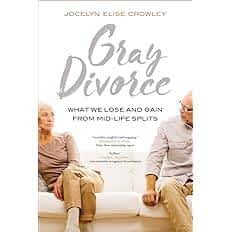
This is one of my favorite books on late life divorce. I read it several years ago and found it rather enlightening as it discusses the point of view from both men and women:
Gray Divorce: What We Lose and Gain from Mid-Life Splits
This book focuses on the challenges and changes of going through a late life divorce.
“Gray Divorce” discusses the rising trend of divorces among couples over 50. Jocelyn Elise Crowley explores reasons, impacts, and gender differences in this mid-life transition, shedding light on economic and social consequences. With insights on individual shifts, life expectancy, and economic disparities, Crowley advocates for supportive policies to aid those navigating this challenging journey.
This post may contain affiliate links. I earn from qualifying Amazon purchases at no extra cost to you. This content is for informational purposes only and is not a substitute for professional advice. Read full disclaimer.
Thank you for reading this post, don't forget to subscribe!