


Your Body Already Knows You’re Emotionally Exhausted (Even If You Don’t)
Sleep doesn’t fix the kind of tired that lives in your bones.
Ever crash for eight hours and wake up feeling like you’ve been hit by a truck? I’ve been there too.
You blame your mattress, your late dinner, maybe the weather. Anything but the real thing that’s been quietly draining you for months: emotional exhaustion.
Here’s the tricky part. Emotional exhaustion sneaks in slowly, disguised as just another rough patch. You tell yourself everyone feels this way sometimes. You push through because that’s what you do.
Then one day, you realize you’ve been pushing through for so long that you can’t remember the last time you felt like yourself.
Your body knows before you do. It keeps score in ways that are easy to miss if you’re not paying attention. The headaches that won’t quit. The stomach issues that come out of nowhere. The colds you can’t shake. Your body is waving red flags, and it’s worth listening.
💡There is a book called “The Body Keeps the Score” that does a deep dive into the physical affects of of emotional exhaustion, as well as other external factors, and it’s quite fascinating.
Our bodies are deeply physically affected by our emotions. I am sure of this, because my body tells me daily, but I didn’t know why I was so tired in every way. I didn’t have a name to put with the feeling.
When “Just Tired” Becomes Something Else
I had a colleague once who swore she was fine. She was juggling a stressful job, aging parents, teenagers at home. She kept showing up, kept smiling, kept saying yes to everyone who needed her. Then one afternoon, she just broke down in the parking lot.
Not because something terrible happened, because nothing had changed, and that was the problem.
Emotional exhaustion doesn’t always look like a breakdown. Sometimes it looks like irritability that makes you snap at people you love. Sometimes it’s brain fog that makes you forget why you walked into a room. Or maybe it’s the weird detachment where you’re there, but you’re not really there.
Your emotions go numb. Your motivation vanishes. Things that used to matter just don’t.
What Your Body Is Actually Telling You
Here’s something most people don’t realize: being emotionally exhausted isn’t just a mental thing. It rewires your whole system.
Your immune system starts slipping. You’re getting sick more often, taking longer to recover. Your heart feels the strain too, literally. Blood pressure creeps up. Your gut reacts with cramps, bloating, that constant uneasy feeling. Your hormones get thrown off balance, leaving you in a state of fatigue that no amount of coffee or sleep can touch.
The Signs You Might Be Missing
Maybe you’re always tired, even after a full night’s sleep. The kind of tired where your bones feel heavy.
Maybe your motivation has disappeared. Laundry piles up. Texts go unanswered. Projects sit unfinished. You’re not lazy. You’re drained.
Maybe you’re snapping at people over the smallest things. Traffic feels personal. Your partner chewing gum becomes unbearable. Your nerves are already fried, so everything feels like too much.
Maybe your brain feels foggy. You reread the same sentence five times. You walk into rooms and forget why. Concentration becomes impossible.
Maybe you feel detached from everything and everyone. The things you used to love don’t spark anything anymore.
You’re going through the motions, but there’s no feeling behind it. That numbness is one of the scariest parts because it creeps in so quietly.
Maybe sleep has become a cruel joke. You’re exhausted, but you can’t fall asleep. Or you fall asleep and wake at 3 a.m. with your mind racing. Your nervous system won’t let you rest, and without rest, the cycle just keeps spinning.
Maybe your body is sounding every alarm it has. Tension headaches. Tight shoulders. Stomach problems. Getting sick constantly. When your emotions are maxed out, your body feels it too.

What Happens When You Keep Ignoring It
Ignoring emotional exhaustion doesn’t make it go away. It makes it dig deeper.
Your mind starts to spiral. What begins as stress can turn into anxiety or depression. The fog gets thicker. The detachment gets stronger. You start to believe this is just how life is now.
Your physical health takes real hits. Chronic stress weakens your immune system, strains your heart, messes with your digestion, and throws your hormones into chaos.
Your adrenal glands, the ones that help you deal with stress, get so overwhelmed that they can’t keep up anymore. You’re running on a battery that never recharges.
This isn’t about being dramatic. It’s about recognizing that your body is trying to tell you something important.
How to Actually Start Healing
Recovery from emotional exhaustion isn’t a quick fix. It’s slow, intentional work. You don’t bounce back overnight, and that’s okay.
First, you have to be honest with yourself. Say it out loud if you need to: “I’m emotionally exhausted.” No guilt. No shame. Just truth.
Then figure out what’s draining you. Is it your job? Certain relationships? Saying yes when you mean no? Identifying your triggers helps you protect yourself going forward.
Make rest non-negotiable. Not the kind of rest where you’re scrolling on your phone. Real rest. Sleep becomes sacred. Unplug from the constant noise. Give your brain actual space to breathe.
Move your body, even a little. A slow walk. Gentle stretching. Movement helps release the stress your mind is holding onto.
Feed yourself real food. Not a strict diet, just food that loves you back. Whole foods, colorful vegetables, plenty of water. What you eat affects how you feel more than you think.
Let someone in. Talk to a friend, a therapist, someone who gets it. You don’t have to carry this alone. Just saying “I’m emotionally exhausted” out loud can lift some of the weight.
Set boundaries like your life depends on it, because honestly, it kind of does. It’s okay to say no. It’s okay to put yourself first. Protecting your peace isn’t selfish. It’s survival.
Coming Back to Yourself
The thing about emotional exhaustion is that it doesn’t just steal your energy. It steals you. The version of yourself that felt joy, curiosity, connection. The version that had capacity for more than just getting through the day.
But here’s what I know: you can come back. Not all at once, not perfectly, but gradually. One boundary at a time. One honest conversation. One moment of real rest.
Your body has been trying to get your attention. Maybe it’s time to listen.
You don’t have to keep losing yourself to keep the peace. You don’t have to keep shape-shifting for everyone else. You’re allowed to stop, to breathe, to take up space in your own life again.
Spotting the signs of being emotionally exhausted early is one of the best things you can do for yourself. When we ignore the signals, they don’t fade. They grow into something heavier.
So pay attention. Be kind to yourself. And remember: recovery isn’t about doing more, but finally giving yourself what you’ve needed all along.
Before You Go…
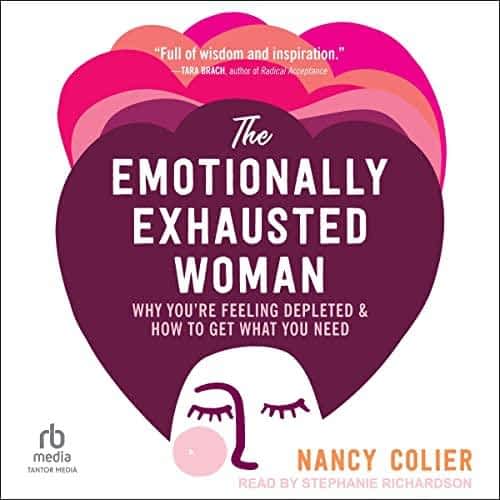
If emotional exhaustion has you feeling empty, I suggest this book written exclusively for this issue.
If you’re anything like a lot of women today, you might be carrying a quiet storm of exhaustion, stress, anxiety, maybe even a deep sense of “something’s off.” You’ve probably spent years being everything for everyone, tending to their needs while yours sit on the back burner. That kind of emotional labor adds up.
In “The Emotionally Exhausted Woman,” therapist and spiritual teacher Nancy Colier offers the understanding, and support you’ve been seeking. With her down-to-earth guidance, you’ll start to see your needs, not as something to feel guilty about, but as something worth honoring. You’ll learn how to recognize the emotional burnout that comes from always putting yourself last, and more importantly, how to stop doing it. This isn’t about bubble baths and pedicures (though those are nice). It’s about real self-respect. The kind that helps you set boundaries, listen to your intuition, and show up for yourself without apology.
Thank you for reading this post, don't forget to subscribe!