
Being the Black Sheep Isn’t What Your Family Told You It Was
I remember the first time I realized I was different from the rest of my family. I was sitting at the dinner table, and everyone was laughing at something I didn’t find funny. I looked around and felt this strange distance, like I was watching them through glass. They all seemed to speak the same language, one I’d never quite learned.
If you’ve ever felt like the odd one out in your own family, you know exactly what I’m talking about. You’re the one who thinks differently, wants different things, questions what everyone else accepts without hesitation. And somehow, that makes you the problem.
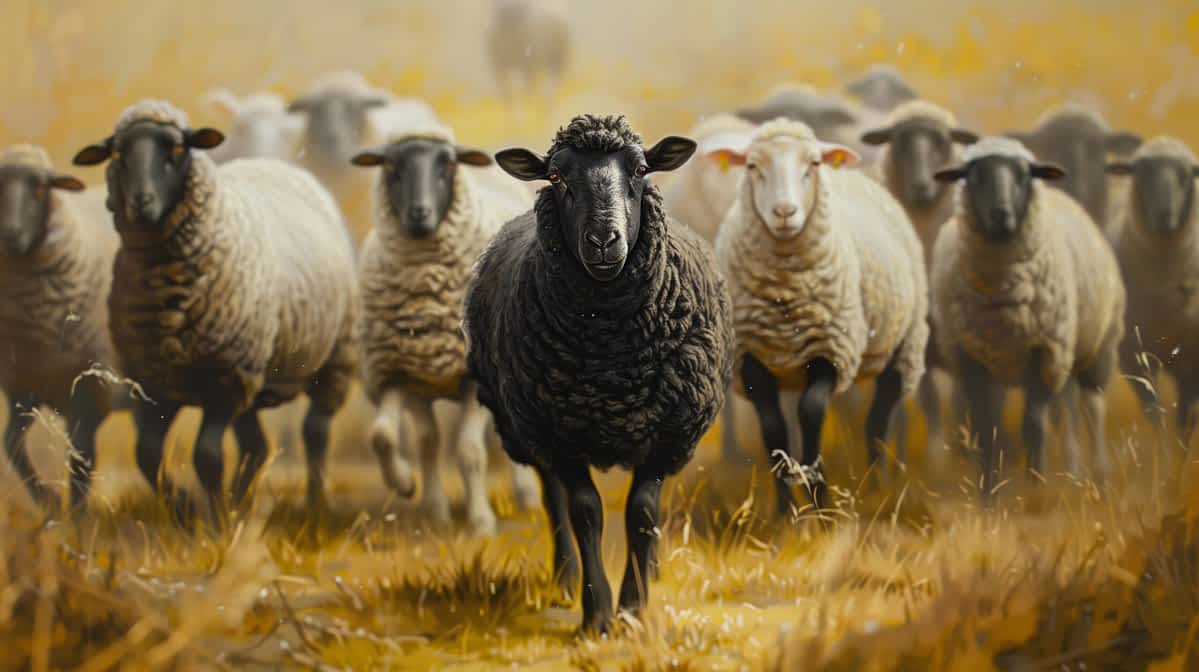
Being the black sheep isn’t just about standing out. It’s about being cast in a role you never auditioned for.
The Label That Sticks
Families love labels. The responsible one. The funny one. The dramatic one. But the black sheep is the label that comes with weight. It’s not affectionate. It’s not neutral. It carries judgment, disappointment, and a quiet message: you’re the one who makes things harder.
You might’ve been the kid who asked too many questions. The teenager who refused to follow the path everyone else took. The adult who chose a life that didn’t match the family blueprint. Whatever the reason, the label stuck, and suddenly everything you did was filtered through it.
Made a mistake? Of course you did. You’re the black sheep. Succeeded at something? Well, it’s about time. The narrative was written before you even had a chance to tell your own story.
When Being Different Becomes Being Wrong
Here’s the thing about being the black sheep of the family: you don’t just feel misunderstood. You start to feel like something’s wrong with you. When everyone around you seems to fit together so easily, and you’re the only one struggling to find your place, it’s hard not to internalize that.
You begin to wonder if maybe they’re right. Maybe you are too sensitive. Too stubborn. Too much, or not enough. The doubt creeps in slowly, settling into the spaces where confidence used to be.
I’ve watched people shrink themselves trying to fit into families that never made room for them. They apologize for their opinions, downplay their achievements, and tiptoe around their own needs. All because somewhere along the way, they learned that being themselves was the problem.
The Scapegoat Role You Never Signed Up For
There’s something darker that happens sometimes. The black sheep becomes the family scapegoat. Every dysfunction, every uncomfortable truth, every problem gets funneled toward one person. You become the reason things aren’t perfect, the explanation for why family gatherings feel tense, the one everyone can point to when they need someone to blame.
It’s exhausting. You walk into family events already braced for impact, already prepared for the subtle digs or the not-so-subtle criticisms. You’re hyperaware of everything you say and do, knowing it’ll be dissected later, turned into evidence of why you’re the difficult one.
And the worst part? Sometimes you start believing it. You start thinking that maybe if you just tried harder, changed more, wanted less, everything would be okay. But it wouldn’t. Because the problem was never really you.
What It Costs to Stay in the Shadows
Staying quiet costs you pieces of yourself. Every time you bite your tongue to keep the peace, every time you pretend to agree when you don’t, every time you shrink to make others comfortable, you lose a little bit more of who you are.
I’ve seen people spend decades trying to earn approval that was never going to come. They twist themselves into shapes they were never meant to be, chasing acceptance from people who made it clear long ago that acceptance had conditions.
You start to feel invisible in your own life. Your thoughts, your feelings, your experiences, they all take a backseat to keeping the family dynamic stable. And stable usually means you staying small.
Recognizing the Patterns That Keep You Stuck
Families have patterns, rhythms they fall into without even realizing it. And if you’re the black sheep, you’ve probably noticed how quickly those patterns reassert themselves. You could go months without seeing anyone, walk into a family gathering feeling good about yourself, and within an hour, you’re right back in that old familiar feeling of not belonging.
It happens because roles are comfortable for everyone else. They know how to interact with you when you’re playing the part they’ve assigned. But the moment you step outside that role, the moment you assert yourself or set a boundary or simply exist in a way that doesn’t fit their narrative, the discomfort ripples through the whole system.
You might notice that your accomplishments get minimized while your mistakes get magnified. You might see that your siblings get grace for the same things you get criticized for. You might realize that your presence is tolerated more than it’s celebrated.
These aren’t accidents. They’re patterns. And recognizing them is the first step toward deciding what you want to do about them.
The Moment You Stop Apologizing for Who You Are
Something shifts when you stop trying to convince people to see you differently. When you stop explaining yourself, defending your choices, justifying your existence. There’s a kind of freedom that comes with acceptance, not of their judgment, but of the fact that their judgment doesn’t define you.
I’m not saying it’s easy. Walking away from the need for family approval feels like losing something fundamental. We’re wired to want connection with the people who raised us, who share our history, who are supposed to know us best.
But sometimes the healthiest thing you can do is stop trying to fit into spaces that were never designed for you.
Reclaiming the Black Sheep Label
Here’s what I’ve learned: being the black sheep isn’t the insult they meant it to be. It means you saw things clearly when everyone else was pretending. It means you asked questions when everyone else was accepting easy answers. It means you chose authenticity over comfort.
Reclaiming the black sheep label means owning your difference instead of apologizing for it. It means recognizing that you don’t fit in with your family not because something’s wrong with you, but because you grew in a different direction.
You get to decide what the label means now. You get to take the shame they attached to it and transform it into something else entirely.

Creating Your Own Sense of Belonging
You don’t have to cut your family off to find peace, though sometimes distance is necessary. But you do have to stop waiting for them to give you permission to be yourself. You have to stop looking to them as the primary source of validation and belonging.
Belonging isn’t something you find in one place. It’s something you build, piece by piece, with people who see you and choose you anyway. It’s in friendships that feel easy. It’s in communities where your weirdness is welcomed. It’s in relationships where you don’t have to explain yourself into exhaustion.
You deserve people who don’t make you feel like an outsider. You deserve spaces where your presence is wanted, not just tolerated. And you deserve to stop carrying the weight of being the problem when you were never the problem to begin with.
The Family You Choose Matters Just as Much
There’s something powerful about chosen family. These are the people who show up without obligation, who love you without conditions, who see all your sharp edges and complications and stay anyway.
They’re the friends who become siblings. The mentors who become parental figures. The communities that become home in ways your actual home never did. They prove that blood doesn’t guarantee connection, and connection doesn’t require blood.
Building chosen family doesn’t mean you’ve failed at biological family. It means you’ve succeeded at recognizing what you need and going out to find it. It means you’ve stopped settling for crumbs when you deserve the whole meal.
What Healing Actually Looks Like
Healing from being the black sheep doesn’t mean everything suddenly feels okay. It doesn’t mean you stop caring about your family or wanting their approval. Those feelings might always be there, somewhere in the background.
Healing looks like understanding that their inability to see you doesn’t mean you’re invisible. It looks like setting boundaries without guilt. It looks like showing up as yourself and letting the chips fall where they may.
Some days you’ll feel strong in your difference. Other days you’ll wish desperately that you could just be like everyone else, that fitting in didn’t require so much of yourself. Both of those feelings are valid.
The goal isn’t to stop feeling hurt by rejection. The goal is to build a life so full and rich and authentically yours that their rejection doesn’t destroy you.
Moving Forward on Your Own Terms
You get to decide what relationship you want with your family moving forward. You get to decide how much access they have to your life, how much energy you’re willing to invest, how much of yourself you’re willing to share.
Some people find ways to maintain connection while protecting themselves. They show up for holidays but leave before things get heavy. They share surface-level updates but keep their real life private. They love from a distance that feels safe.
Others realize that distance isn’t enough, that the healthiest choice is significant separation or even no contact. That’s not failure. That’s self-preservation.
Whatever you choose, make sure it’s truly your choice. Make sure you’re not staying out of guilt or leaving out of spite. Make sure you’re acting from a place of clarity about what serves your wellbeing, your growth, your peace.
You’ve spent enough time trying to be what they wanted. The rest of your life gets to be about being what you are. Different. Complicated. Beautifully, undeniably yourself.
And if that makes you the black sheep, wear it like a badge of honor.
This post may contain affiliate links. I earn from qualifying Amazon purchases at no extra cost to you. This content is for informational purposes only and is not a substitute for professional advice. Read full disclaimer.
Thank you for reading this post, don't forget to subscribe!